
PNEUMATIC CONVEYING ELBOWS & PIPE BENDS
PNEUMATIC
CONVEYING
ELBOWS
Wear-resistant pipe bends and engineering support for industrial bulk-solids transport.
PNEUBEND / ENGINEERING
OUR PRODUCTS
PNEUMATIC CONVEYING ELBOWS AND PIPE BENDS
Engineered for your process. Explore all six initial product families and discuss materials, size and wear-protection options with our team.
01
02
03
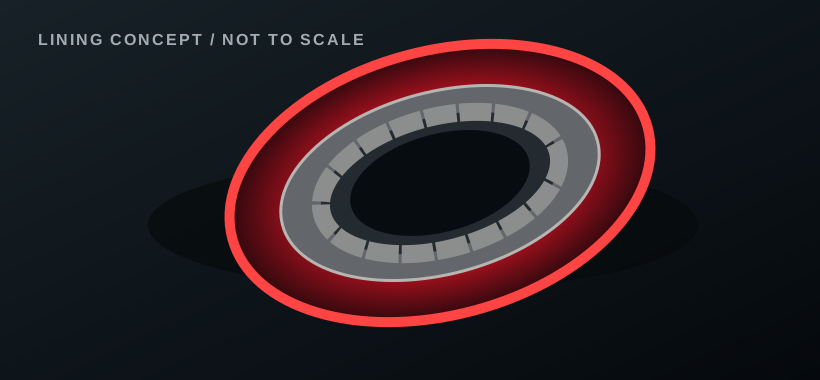
04
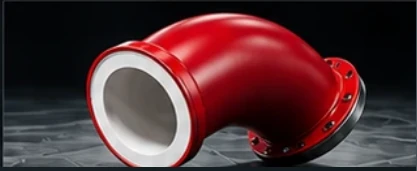
05
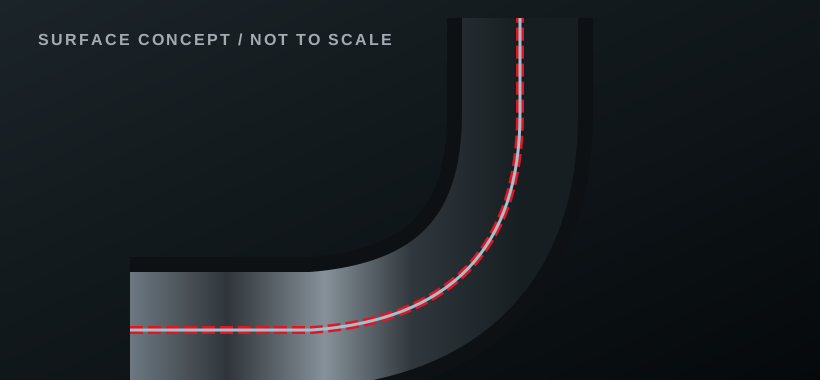
06
Visual assets in this offline concept are illustrations extracted or adapted from the approved design reference, not certified photographs or technical drawings for each model.
TECHNICAL DETAILS
Pneumatic Conveying Elbows and Wear-Resistant Bends
Review the complete home content below. All specifications and product claims remain subject to approval before publication.
Industrial Pneumatic Conveying Bend Solutions
A conveying pipeline changes direction at its bends, but the consequences go beyond the route on a drawing. Particles strike or slide along the inner wall, the solids stream reorganizes, and wear or product damage can concentrate in a relatively small part of the system. PneuBend by Polimak focuses on choosing and supplying elbow configurations around these real operating conditions.
We are preparing six initial product families for industrial pneumatic conveying: compact material-cushioning pocket elbows, smoothly curved sweep bends, fabricated segmented bends, basalt-lined bends, ceramic-lined bends and tungsten carbide hardfaced bends. Each enquiry is checked against the actual material, conveying conditions and pipeline connections before a final configuration is agreed.
Explore Our Six Product Families
Pocket / Material-Cushion Elbows
Cast-body elbows with a purposely shaped material pocket. Proposed in 45° and 90°, DN50–DN300, with EN/DIN or ANSI/ASME-pattern flanged connections. Explore pocket elbows.
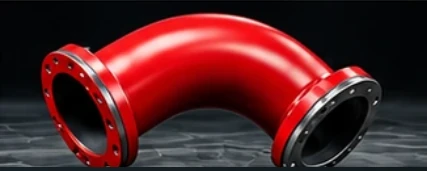
Sweep-Type Bent Pipe Elbows
Continuous curved bends for layouts where a specific centerline radius and tangent arrangement are required. Proposed in 30°, 45° and 90° and DN50–DN400. Explore sweep bends.
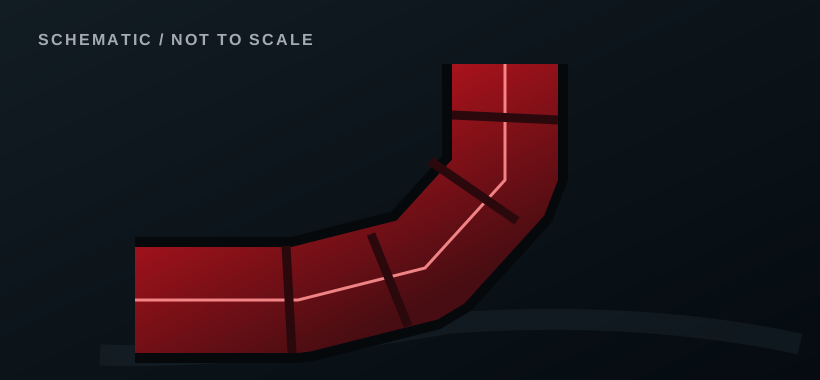
Segmented Pipe Elbows
Fabricated bends built from individual pipe sections. Segment count, joint geometry and nominal radius are designed as one assembly. Explore segmented elbows.
Wear-Resistant Bends
Choose protection appropriate to the wear mechanism: basalt-lined, ceramic-lined or tungsten carbide hardfaced pipe bends.
Engineered for Your Conveying Application
Abrasive Materials
Cement, fly ash, sand and mineral powders can produce severe local erosion. We consider conveyed tonnes, solids loading, gas conditions, particle size and measured wear locations—not hardness alone. Explore abrasive applications.
Fragile and Sensitive Products
Particle breakage can create fines, affect downstream screening and increase waste. The evaluation includes conveying velocity, number of bends, geometry, product samples and acceptance criteria. Read about fragile products.
Plastic Pellets and Granules
Pellet handling may involve streamers, smearing or material build-up. Elbow geometry is only one part of the solution: temperature, line velocity, resin formulation and cleaning also matter. Explore pellet conveying.
Select Bends by Diameter, Angle and Radius
Start with nominal size and actual pipe OD, then select the change in flow direction. For pipe bends, compare fixed centerline radii and connection arrangements; multiple radii may be proposed for the same DN. Pocket elbows instead require flange-face offsets and an overall installation-envelope drawing. Open the bend radius guide.
Materials and Wear-Resistant Constructions
Our proposed pipe-bend materials are carbon steel, AISI 304 and AISI 316 stainless steel. Pocket castings are planned in cast carbon steel, cast aluminium, and 304-type or 316-type stainless cast alloys. Lined products add another decision: the liner, its retention system and the finished internal bore must be specified together. Compare materials and wear systems.
Solutions for Common Conveying Problems
Rapid Elbow Wear
Photograph the damaged area and record the service life in conveyed tonnes or operating hours. Comparing the wear location against velocity, particle properties and downstream damage gives a better starting point for selecting another configuration.
Particle Breakage
Where product degradation matters, define how fines, particle size or breakage will be measured before considering a new elbow geometry.
Blockages and Material Retention
Moisture, cohesive powders, line operating conditions and pocket geometry may all affect material hold-up. Designs intended to cushion abrasive impact should also be assessed for cleaning and changeovers.
Replacement and Retrofit
For an existing installation, we need the connection geometry, available removal space and the piping immediately upstream and downstream. Start a replacement assessment.
Engineering and Manufacturing Expertise by Polimak
PneuBend draws on Polimak’s experience with complete bulk material handling and pneumatic conveying systems. That system-level perspective is valuable when determining whether the elbow, the operating regime, the adjacent pipe or a combination of these is responsible for a problem. Learn about PneuBend.
Product and Installation Gallery
Review photographs by product family and installation type. Product photographs are useful for understanding connections and external construction; approved drawings remain authoritative for dimensions, finished bore and service limits. Open the gallery.
Request a Technical Quotation
Tell us what you convey, your required diameter and angle, the existing or desired bend arrangement, and any operational problems. Attach photos or drawings even if some operating data are not yet known. We will help identify the information needed for a technical proposal. Configure your enquiry.
ENGINEERED FOR YOUR PROCESS
HAVE A CONVEYING CHALLENGE?
Share your material, dimensions and operating conditions. Our team can review the proposed bend configuration.